Celebrating Excellence in Structural Dynamics: Elina Elvelo Recognized at the 2026 BCA Meeting
Each quarter, we highlight a new collection of book reviews exploring a wide variety of topics and perspectives. Whether informative, thought-provoking, or simply enjoyable, these selections reflect the broad interests of our community and may inspire your next great read.
Each quarter, we feature a new collection of book reviews covering a wide range of topics—some thought-provoking, some purely for enjoyment, and all well worth your time. This small but mighty selection is designed to spark curiosity and may even inspire your next visit to the library or bookstore. We are grateful to Jeanette S. Ferrara, MFA, who contributed all of this quarter’s reviews.
We are pleased to share that the American Crystallographic Association (ACA) has been invited to participate in a new national initiative — REV UP, led by the American Association of Physics Teachers (AAPT) and funded by the AIP Venture Fund.
CSD Communications is a way to share small molecule crystal structures directly in the Cambridge Structural Database (CSD) without requiring an associated scientific publication.
Applications for the 2026 ACA Summer Course will open in December 2025, and we encourage anyone passionate about crystallography to apply.
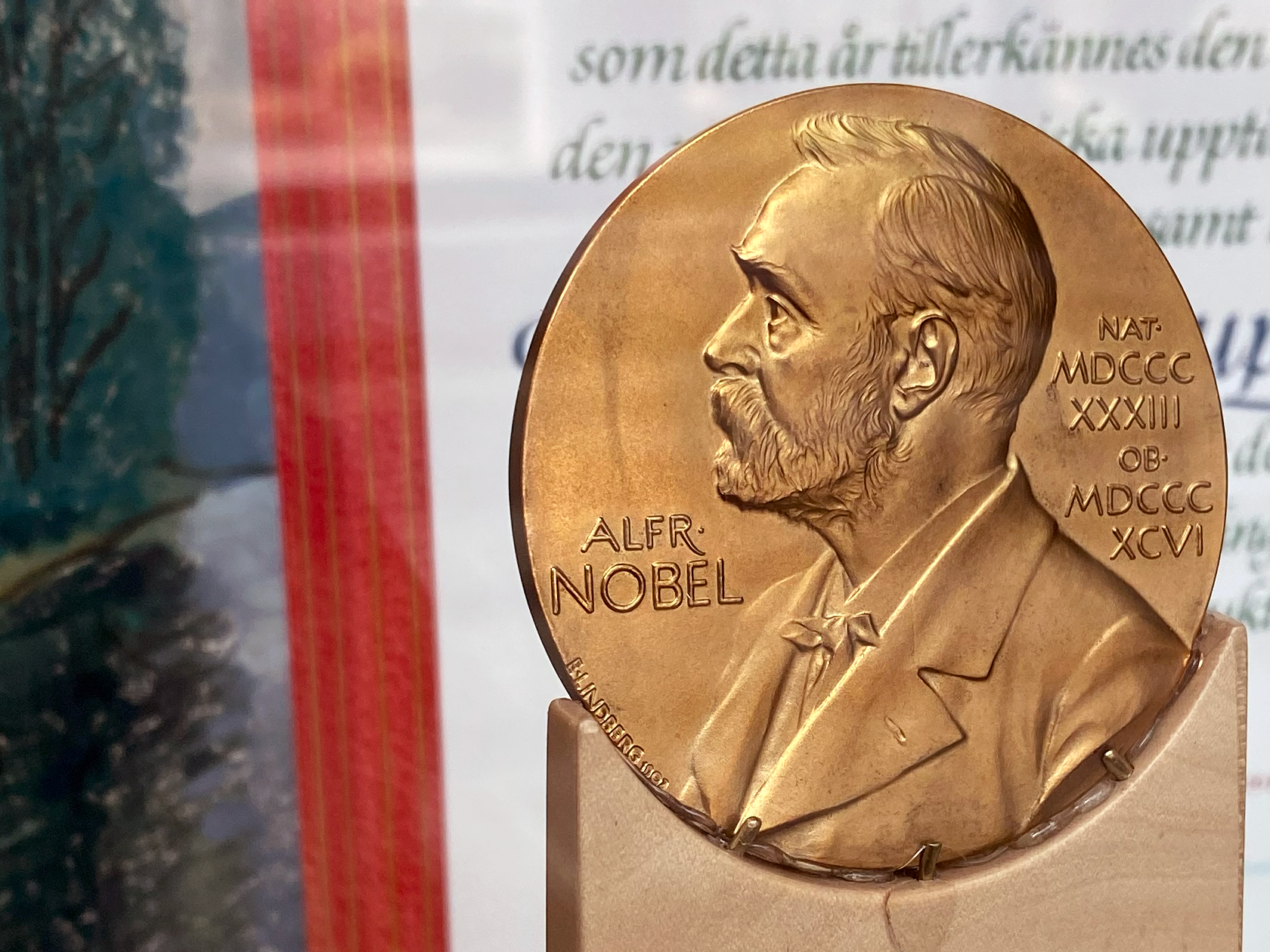
The 2025 Nobel Prize in Chemistry has been awarded to Richard Robson, Susumu Kitagawa, and Omar M. Yaghi for the development of metal–organic frameworks (MOFs) — remarkable crystalline materials that are transforming how we capture, store, and use molecules.
The 2025 Nobel Prize in Physics was awarded jointly to John Clarke (UC Berkeley), Michel H. Devoret (Yale/UC Santa Barbara), and John M. Martinis (UC Santa Barbara) “for the discovery of macroscopic quantum mechanical tunneling and energy quantization in an electric circuit."
The U.S. crystallographic community is undergoing a critical transformation. Since 2018, when the National Science Foundation (NSF) designated crystallography a “mature” field and ceased direct support for the U.S. National Committee for Crystallography (USNC/Cr), the committee has been sustained by private donations, a single NIST grant, and careful budgeting. This patchwork funding model, however, has proven unsustainable. For example, NAS is paid for its services and has not kept pace with basic USNC/Cr management responsibilities, such as updating committee appointments, maintaining its public website or interacting with IUCr.